Why Every Artist Needs a Clean Website
Social media can introduce people to your work, but it should not be the only place your brand lives. A clean artist website gives your music, visuals, services, links, and contact information one official home — a place you control when the algorithm changes, posts get buried, or somebody wants the professional version of what you do.
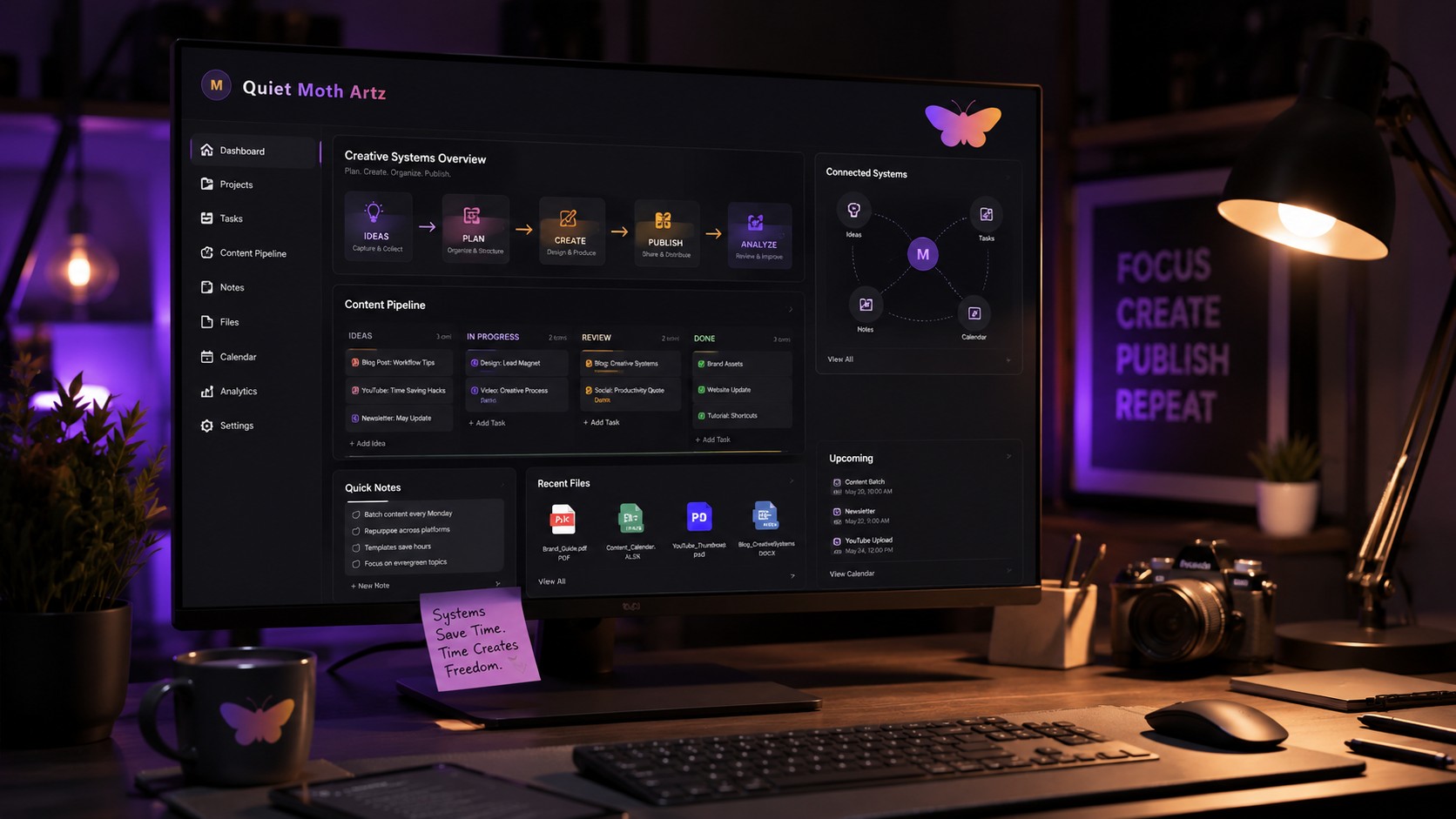
Social media is not your headquarters
Social platforms are useful, but they are rented rooms. The platform decides what people see, when they see it, and how long your post stays alive. That is not a stable headquarters for your creative work.
An artist website gives your online presence a home base. When somebody asks, "Where can I hear your music?" or "Where can I see your work?" or "How do I book you?" you should not have to send them through five different apps.
A website for artists should make the answer simple. One clean link should explain who you are, what you do, where the work lives, and how people can contact you.
A clean website makes the work feel official
People judge presentation fast. That does not mean the talent is not real. It means the first impression matters, especially when somebody is deciding whether to listen, book, buy, share, or reach out.
A professional website for creatives does not need to be overbuilt. It needs clean website design, strong order, and enough breathing room for the work to speak clearly.
Good artist website design makes a musician, designer, performer, or creative brand easier to take seriously. It tells people you are not just posting — you are building something with shape.
What an artist website should include
A strong creative portfolio website does not need to be complicated. It needs to show the right things in the right order.
At minimum, it should include:
- your name or brand
- what you create
- your best work
- your latest project
- music, videos, portfolio, or service links
- booking or contact information
- social links
- a clear call to action
For a music artist website, that might mean songs, videos, show dates, press photos, and an artist booking website flow that makes inquiries easy. For a designer or service provider, it might mean portfolio pieces, packages, testimonials, and a project request button. The point is to make the next step obvious.
Your site should turn attention into action
Attention is not the same as direction. A video can get views and still leave people unsure what to do next.
A good site guides people. Fans should know where to listen. Viewers should know where to watch. Clients should know how to book. Buyers should know what to buy. Collaborators should know how to contact you. Supporters should know what to share.
That is where a clean website earns its place. It takes scattered interest and gives it a path.
You control the story
On social media, your work sits beside distractions, arguments, ads, memes, and whatever the algorithm wants to push next. On your own site, the order is yours.
An independent artist website lets you decide what people see first: the song, the reel, the project, the mission, the booking link, the visuals, the message. That control matters because presentation is part of the brand.
Your personal brand website does not have to pretend you are bigger than you are. It just has to make your artist online presence feel clear, intentional, and easy to understand.
Start simple, then build
You do not need a massive website on day one. A strong one-page site can do a lot if the message is clear and the structure is tight.
Start with:
- a strong intro
- a short about section
- work or music highlights
- service or booking info
- social links
- contact form or email button
Once that foundation is up, you can add a store, blog, press kit, portfolio, event page, or full media kit. Build the base first. Then add the rooms.
The point is clarity
A clean artist website is not about looking fancy for no reason. It is about making it easier for people to understand what you do and take the next step.
If you are an artist, creator, musician, designer, or small brand trying to grow, your website should answer three questions quickly:
- Who are you?
- What do you do?
- How can people connect with you?
That is the real answer to why artists need a website. If those answers are clear, the site is doing its job. If they are buried, the design needs work.
Keep Reading
Back to Creative NotesWhat Makes a Flyer Look Professional?
Coming Soon
How to Turn a Rough Idea Into a Hook
Coming Soon
Need a clean website for your creative brand?
Quiet Moth Artz can help shape a mobile-ready website that makes your work look official, gives people one place to understand what you do, and makes it easier for fans, clients, or collaborators to contact you.